
CAMILLA WELLTON · DIARY
By Camilla Wellton

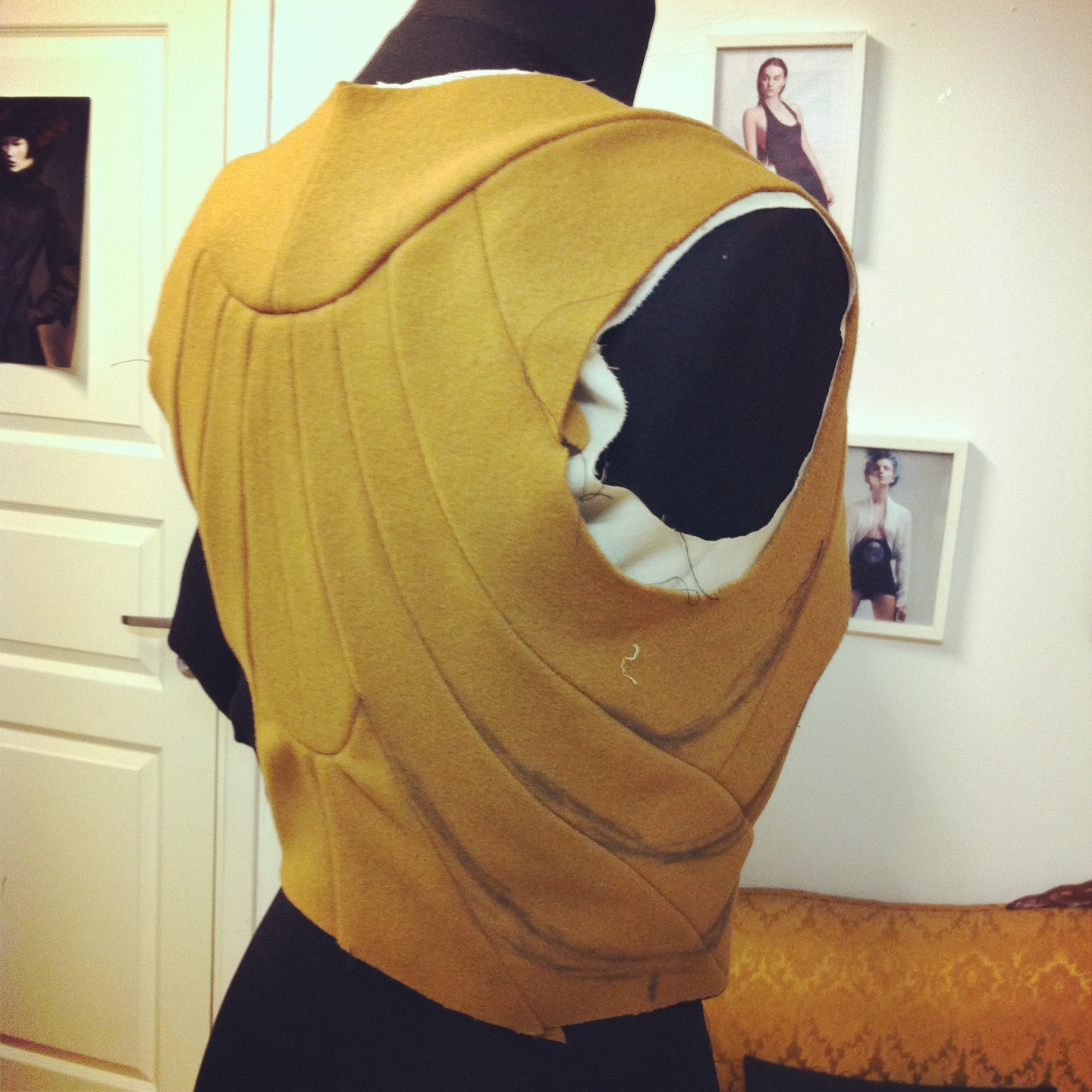
In the photograph above, the rounded openings of The Surreal frame the arms and change the outline of the body. The garment suggests a way of inhabiting space that is both recognisable and unfamiliar. Before anyone explains a story, a possibility has begun to take shape.
Science fiction has been central to my collections. I love the permission it gives the imagination to reconsider what a body might wear, who might occupy a position of authority and what a future could feel like from the inside. Clothing gives those questions something visible to work with.
In 2021 and 2022, I was an artist in residence with FutureBrownSpace, led by John-Paul Zaccarini. My contributions included costume, styling, photography and image editing. The work brought my interest in fashion and speculative worlds into a shared creative setting.
The AfroStar Galactica invites audiences into a speculative journey shaped by Black Study and performance. The language of passengers and crew changes the relationship between the people present. You are entering an imagined situation together, and the visual world helps establish how that situation can be lived.
Costume contributes before a character explains anything. A silhouette may suggest status, movement, allegiance or an unfamiliar kind of competence. A performer can begin to discover a role through the act of wearing it. The audience reads the result, bringing its own expectations into the encounter.
This gives the making a practical question: what does the clothing help someone do within the world we are creating? It may need to make a figure recognisable, support a gesture or establish a relationship with another character. The answer belongs to the whole collaboration, including the performers and the setting.
I can make an image more expansive through photography and editing, but the body remains the place where the proposition becomes particular. A person stands in the clothes. The imagined world has someone inside it.
Speculative work can change the assumptions carried by a familiar image. Who appears as the explorer? Whose knowledge matters? Who is at the controls, and who has been treated as scenery? Choosing a different arrangement changes what the audience is asked to imagine.
For me, that is part of fashion’s capacity to shape perception. Clothes help make a role visible and credible within a story. They can also make its conventions easier to notice. Something that seemed inevitable turns out to have been a design choice, one that can be reconsidered.
There is room for play in this. An unexpected combination can invite curiosity before an explanation would. Humour, glamour and strangeness can bring people closer to a question because the world asking it is pleasurable to enter.
An everyday wardrobe contains imagined roles too. We dress for a job we have just begun, an occasion we have been looking forward to or a way of being we would like to try. The first attempt may feel unfamiliar because the image is arriving before the habit.
Science fiction gives that process a larger stage. It lets us explore a possibility far enough from routine to see some of our routines more clearly. Returning to ordinary life, we may notice which conventions we enjoy and which we have simply stopped questioning.
Look at the silhouette in the photograph above. What kind of world do you imagine around it? What in the cut or pose led you there? Following that response lets you see fashion doing its work: giving a possible self a form, and inviting someone else to recognise it.