
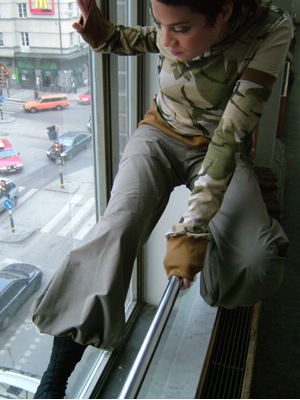
CAMILLA WELLTON · DIARY
By Camilla Wellton
A dress can look exactly right until you sit down. A sleeve can be beautiful with your arms at your sides and become much more interesting when you reach. The mirror gives you one encounter with a garment. Moving gives you several more.
I am interested in that exchange because clothes become part of how we occupy space. They can invite a gesture, make us aware of an outline or require an adjustment. Wearing a garment means discovering a relationship between its shape and the body we bring to it.
When I designed the Kimonoat, I gave its sleeves enormous room. That width made the movement of my arms something I could feel and notice; a small gesture travelled through the rest of my posture. I loved the idea that a coat might invite its wearer to move with more attention, without ever telling her how she ought to move.
My yoga practice began at fifteen and has remained part of my life through teaching, owning a studio and choosing, at thirty, to focus on my fashion brand. Yoga and meditation have shaped all my collections. Attention to the body has continued through the clothes, even as the form of my work has changed.

In The Water, a hand resting in a pocket changes the feeling of a pale dress. The gesture gives the eye somewhere to settle. Perhaps she is waiting, listening, or simply enjoying the shape of her own stillness.

In The Rise, a turning body brings the flare of a coat to life. The lower volume moves away from the legs while the waist holds its shape. An outstretched arm and a folded paper bird let two kinds of movement meet in one image.

In The Awakening, I gave the patterned sleeves enough room to make even a small movement of the arms visible. The silhouette answers the body as it moves.
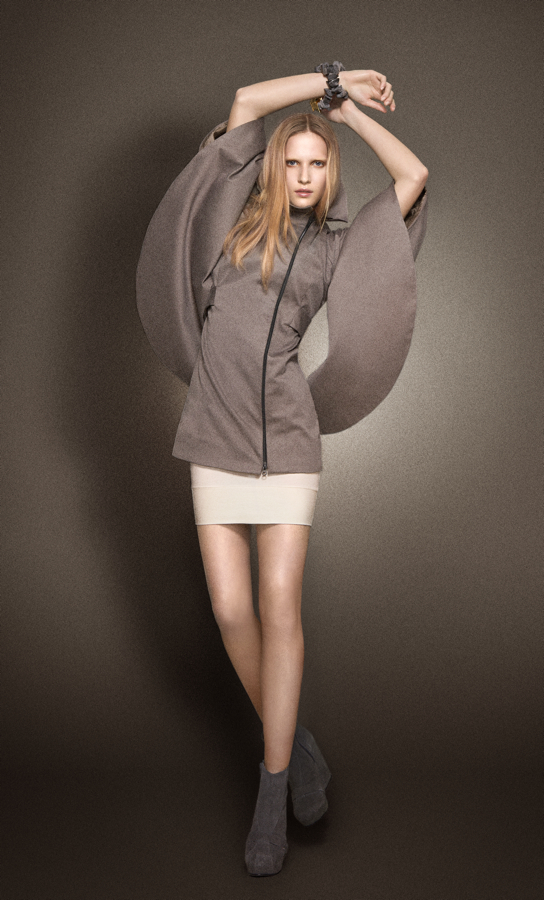
In The Surreal, I made the empty space around the arms part of the silhouette. The rounded openings interrupt what we expect a sleeve to do. You can see both the body and the air around it, and for a moment they seem to belong to the same form.
Photographs can draw your attention to those possibilities. Trying a piece gives you the next part of the conversation. Where do you feel freedom? Where do you become conscious of the garment? Do you enjoy that awareness?
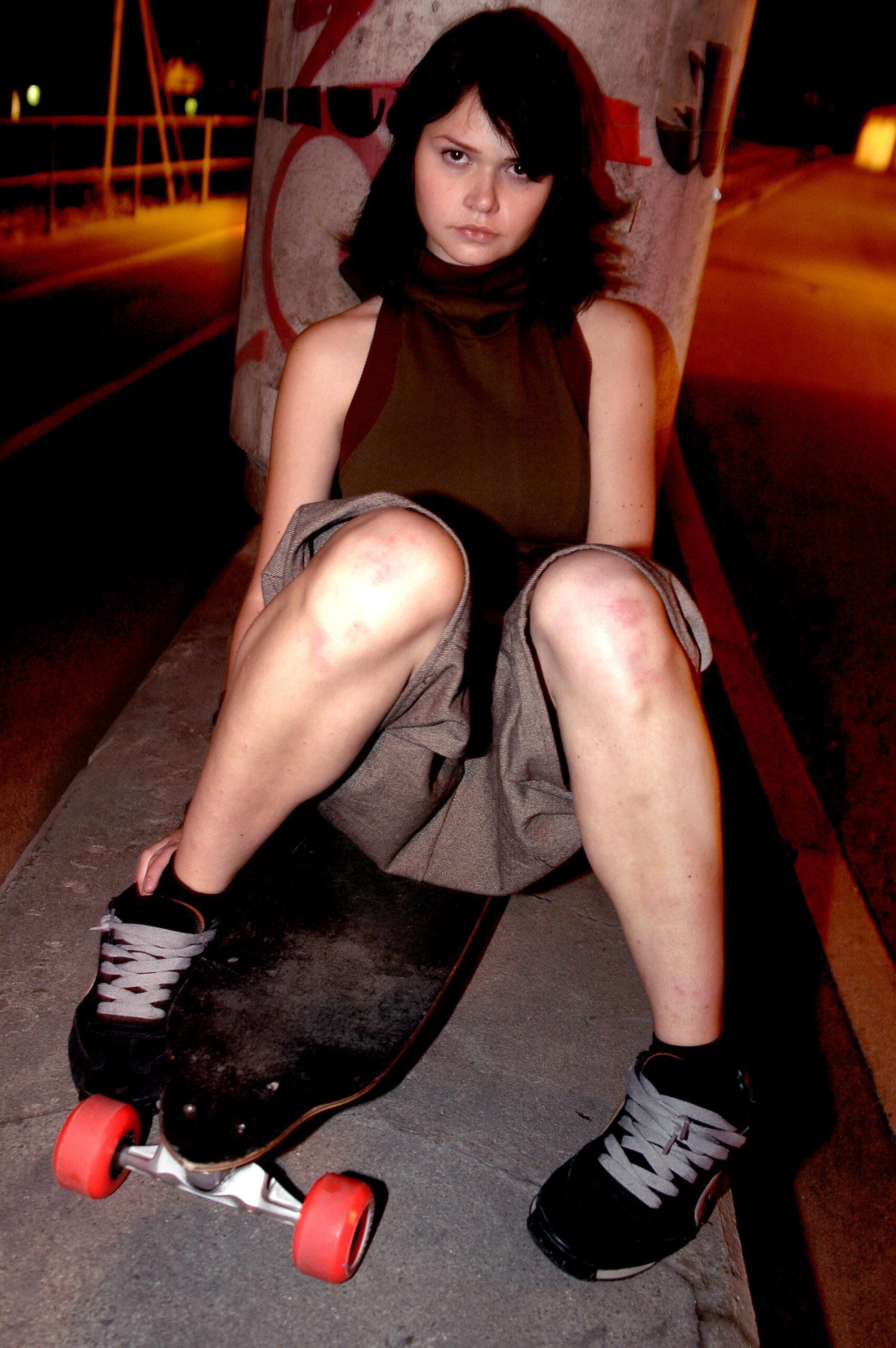
In 2003, my cousin Anna Wellton and I created Chix on Boards. Its street and skate imagery brings the clothes into contact with sitting, crouching and moving through an urban setting. Looking across that collection and the more sculptural work, you can see how different contexts ask different things of a silhouette.
A garment for an evening of conversation has a different practical life from one worn while cycling to work. Even the same dress changes its relationship with you when you exchange a light bag for a heavy one. Your day belongs in the fitting.
Try sitting in the way you actually sit. Reach for something. Walk at your usual pace. Put on the coat or carry the bag you intend to use. These ordinary actions make the choice more specific than asking whether the garment looks good in one position.
Sometimes you enjoy a garment because it changes the gesture you feel like making. A wide hem may invite a turn. A clear shoulder line may make you more aware of your posture. A generous shape may give you a sense of room around yourself.
That experience is personal. What feels expansive to you may feel cumbersome to somebody else. The useful question is whether you enjoy the relationship and want to live with it.
I want the woman wearing my work to have a part in discovering what it becomes. She may be drawn to the drama of a silhouette, the quiet pleasure of a pocket or an unexpected ease in the way the pieces sit together. Each is a way of feeling more at home in her own presence.
When you next try something on, give it a little of your day. The body standing still has offered an introduction. The body moving can tell you more.