
CAMILLA WELLTON · DIARY
By Camilla Wellton
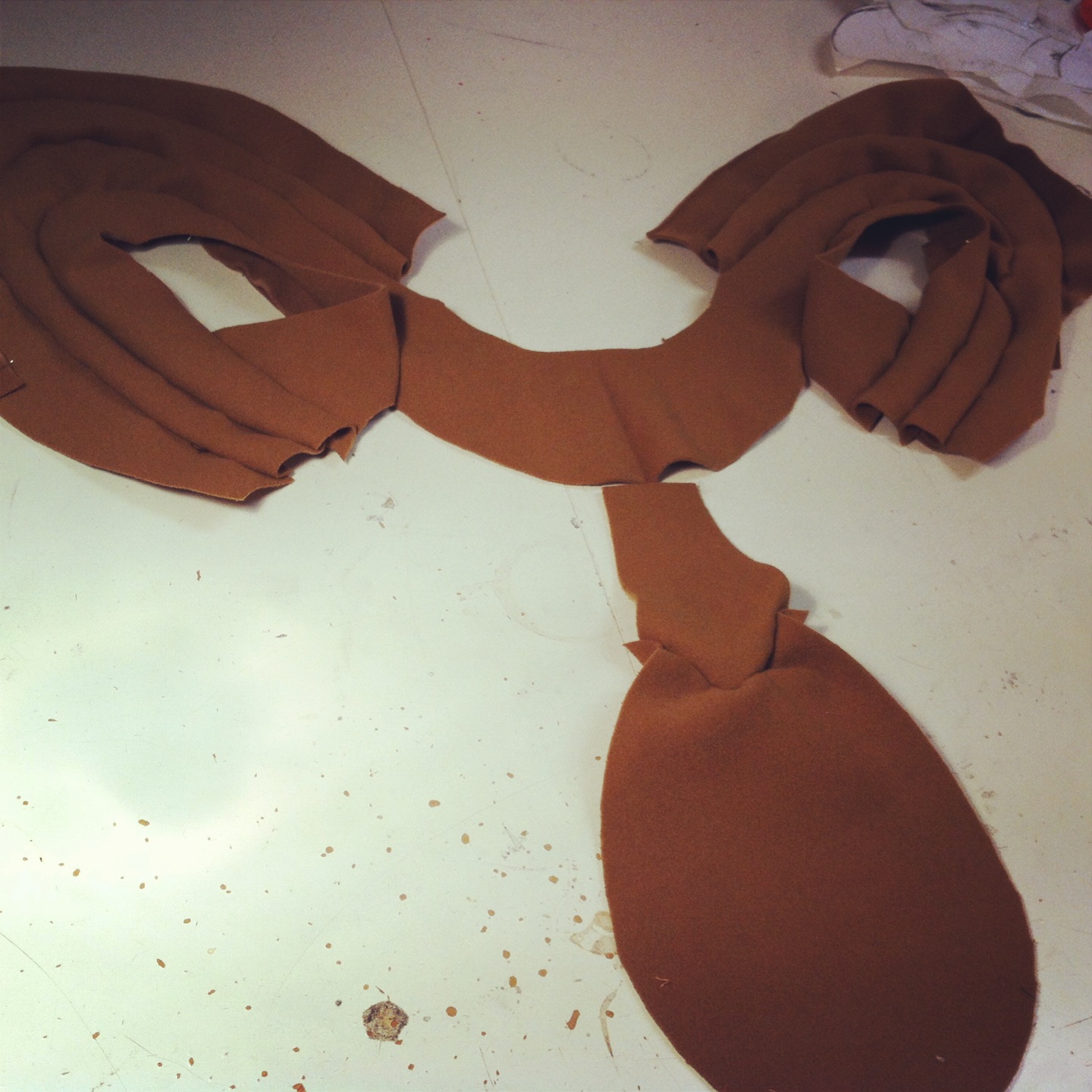
A curved seam can look inevitable once a garment is finished. In the studio, it begins as a decision that still needs to prove itself. The material lies flat. The body does not. Between the two, I have to work out how an idea will stand, fall and move.
I make my own patterns, toiles and first samples. A toile is a trial version of a garment: a way to take a shape off the page and find out what it does around a body. It lets me see where a line carries an idea and where the material is asking for something else.
The work is practical, but the reason for doing it is often a feeling. I may want a particular sense of presence, an enclosing shape or a movement that becomes visible as someone turns. The pattern has to translate that intention into pieces that can be joined and worn.
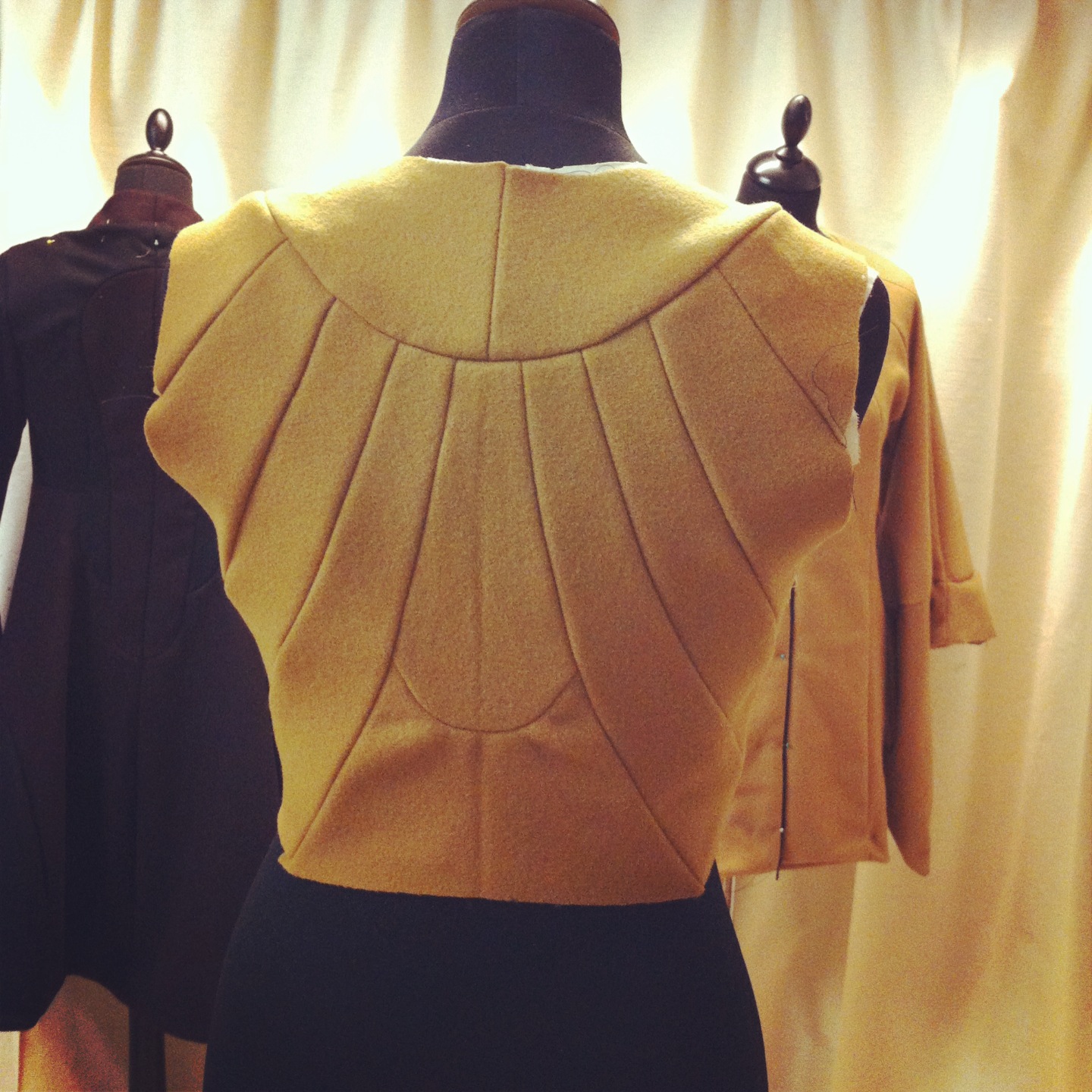
In the photograph above, you can follow the curved panels across the upper back. Look at where one piece ends and the next begins. The seams organise volume around the body; their placement contributes to the outline you see from a distance.
The unfinished edges keep the process visible in the photograph above. At this stage, a garment is still open to revision. A section can be adjusted, a curve reconsidered, a relationship between two pieces changed. The point is to discover what the form needs while there is still room to respond.
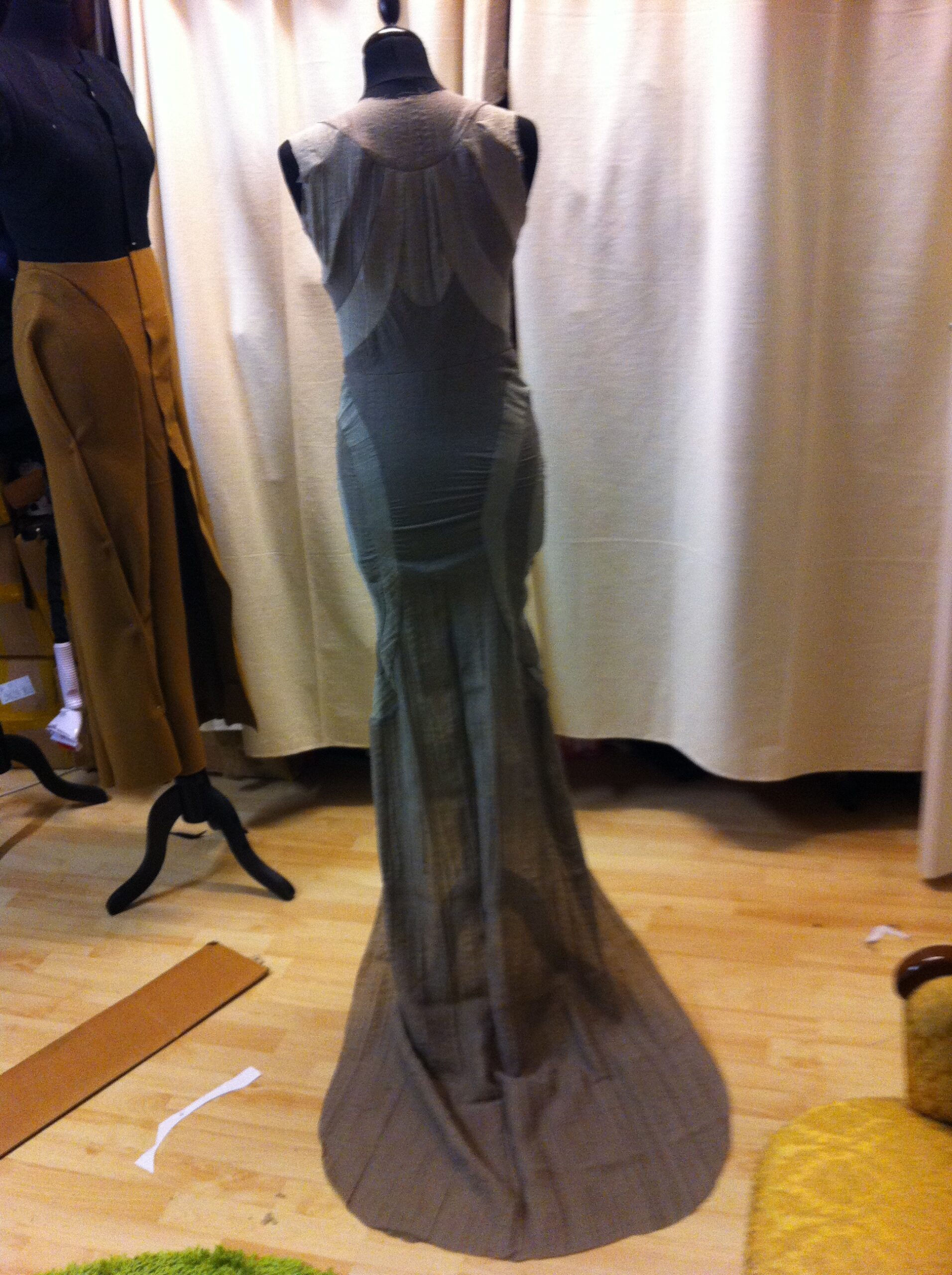
The long grey dress in the photograph above makes another relationship visible. It follows the back and hip before extending into a floor-length skirt. Seen from behind, the upper shaping and the length below belong to one continuous proposition. The garment asks you to notice how the body occupies the whole outline.
When you look at a finished piece, try following one seam. Where does it begin? What does it bring close to the body? Where does the shape open out? You start seeing the decisions that make an impression possible.
I began making clothes as a child because they helped me maintain a connection with myself. Construction became the means of making that connection tangible. A desired feeling needed something I could actually put on.
This is where fashion as art and fashion as technology meet for me. The image matters, and so does the arrangement that allows someone to inhabit it. An expressive collar needs a relationship with the neck. A dramatic sleeve needs an opening through which an arm can move. The material must carry the idea into use.
Sometimes the first sample reveals a possibility I could not have fully imagined in advance. The curve has more life from another angle. The weight changes the fall. Making involves listening closely enough to recognise that information and decide what to do with it.
A dress form helps me see construction. The wearer introduces another kind of knowledge. She turns, reaches, sits and brings her own relationship with being seen. Her preferences give the garment a life beyond the one I imagined while cutting it.
That is part of the pleasure of designing for someone else. I can shape an invitation through proportion and material; she discovers how she wants to use it. The same coat may help one woman feel gathered and another feel expansive. Her experience gives the form its particular meaning.
Before the garment, there is the work of finding a shape. After the garment, that work continues in the life of the person wearing it.